From :- BBC World News
By :- Pauline McLean - Scotland arts correspondent
Edited by:- Amal Udawatta
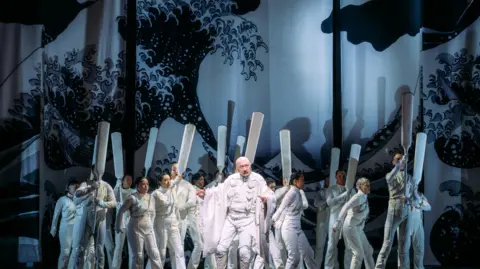
Japanese artist Katsushika Hokusai created more than 30,000 artworks during an extraordinary nine-decade career.
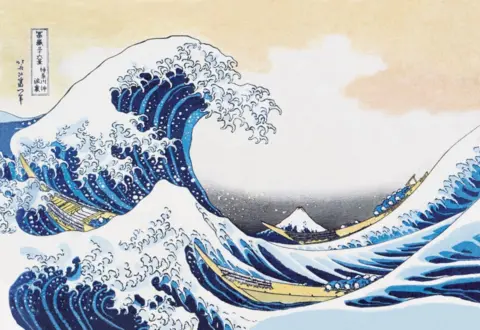
One image in particular from two centuries ago - the picture The Great Wave off Kanagawa - has inspired countless works ranging from animations to T-shirts.
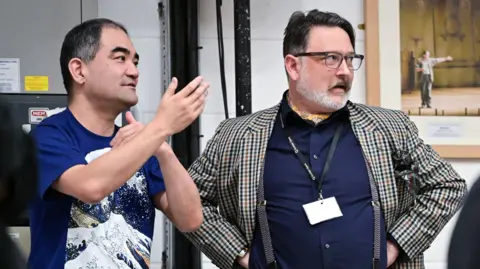
The latest example of this is a new work for Scottish Opera by Japanese composer Dai Fujikura and Scottish librettist Harry Ross.
The pair had collaborated on three operas together when Dai and his family were invited to an exhibition of Hokusai's work in London in 2017.
"We didn't know anything about Hokusai," says Dai, who was born in Osaka but moved to London when he was 15.
"We'd seen that picture, the image of The Great Wave, but that was it.
"So we went and we were really moved by it then my wife said you should write an opera about Hokusai's life."
Librettist Harry agreed.
 Julie Howden
Harry says they started to look into Hokusai's life and realised it was a "long and storied" one.
"I was put in touch with some academics in Tokyo who had translated a previously untranslated biography of Hokusai," he says.
"It's slightly embellished but it made me realise this person is incredible."
Katsushika Hokusai was born in Japan in 1760, and began painting from the age of six.
Although he is best known for his wood block prints, he worked in a variety of other mediums, including random sketches known as Manga.
Harry says this book called Manga was what made Hokusai most famous in his own lifetime.
"He has pictures of all sorts of different things there, such as a camel," he says.
"No one had ever seen a camel.
"He didn't even know what they looked like, but he asked someone from an international delegation to tell him and then he drew a camel and it's actually pretty accurate."
 Getty Images
Hokusai was constantly pushing at boundaries, both in the kind of art he made and the materials he used.
The breakthrough for The Great Wave off Kanagawa was the discovery of a brand new colour, Prussian Blue.
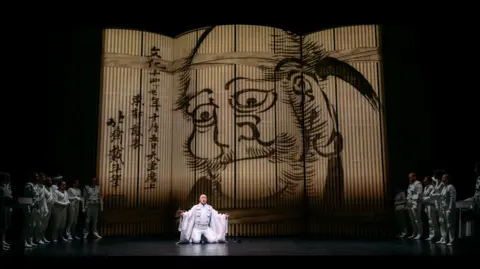
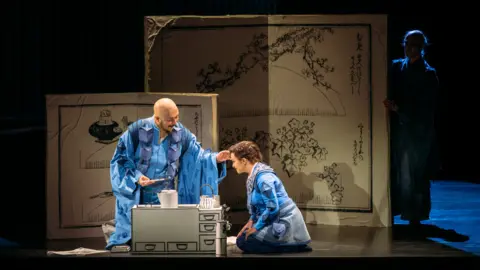
The challenge for the production team at Scottish Opera when collaborating with Japanese company KAJIMOTO was to bring those innovations to life on the stage.
"We've taken objects from Hokusai's sketches and made exact replicas of them so it is as if they've just popped out of the art," says Emma Robinson, deputy head of props.
"We've also taken inspiration as a creative team from many different places but one by one we all found ourselves looking at a Japanese restaurant in New York called Shirokuro where everything, from the moment you walk in, is made of black outlines.
"So we've taken that concept and used it on our stage as well.
 Mihaela Bodlovic
This kind of cultural collaboration between Scotland and Japan is not new.
More than a century ago, Scottish artists such as the painters known collectively as The Glasgow Boys and the architect Charles Rennie Mackintosh were fascinated by all things Japanese.
Glasgow art dealer Alexander Reid brought woodblocks back from Paris for his customers.
And it wasn't just the work they knew. They also knew the artists who created the work, including Hokusai.
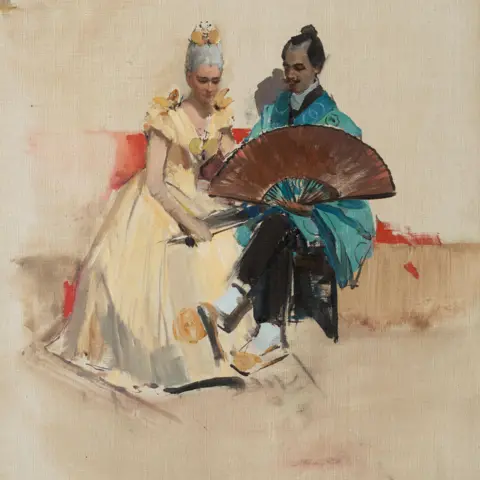
Among the guests dressed as their favourite artists at a celebrated fundraising event for the Glasgow Art Club in 1889 was the painter Edward Arthur Walton, who wore Hokusai's distinctive Prussian Blue kimono and head scarf.
The moment was captured in Sir John Lavery's painting which still hangs in the National Galleries of Scotland today.
 National Galleries of Scotland
Despite his influence and prodigious output, Hokusai struggled to survive as an artist, something the opera picks up on.
"He writes parodies of himself when he's writing to his publishers, trying to find some more investment and he's angry with them," Harry says.
"He doesn't want the money to have the money, he wants the money to make the work.
"Although he became really famous, he had to support all these people working in his workshop."
The work for which he's best remembered was not shown until the 1867 International Exposition in Paris, 18 years after his death. But its timing meant it influenced every French Impressionist from Manet to Degas.
And it continues to turn up on every day objects like bank notes and passports as well as a smartphone emoji.
 Mihaela Bodlovic
In the decade since Dai and Harry first began their opera project there has been a new blossoming of interest in Japanese culture, and especially Hosukai, who became the subject of a major TV biopic in Japan in 2020.
"Hokusai is everywhere. He has never been more popular," says Dai.
"Train stations, stationery, calendars, there are people wearing the image without knowing what it is.
"There's an awareness and a respect for Hokusai, beyond his popularity, so to have The Great Wave opera premiered now is perfect timing.
Comments
Post a Comment